Duncan Wedderburn's compulsive gambling
Poor ThingsDuncan Wedderburn's compulsive gambling is a recurring force in his journey with Bella Baxter: each apparent recovery gives way to another wager, while Bella's attempts to limit the damage repeatedly become part of the next crisis. The pattern moves from his fixation on gold to betting-shop losses and card games, exposing the gap between his confidence in his own skill and the instability of the life he promises her.
The Promise of Control
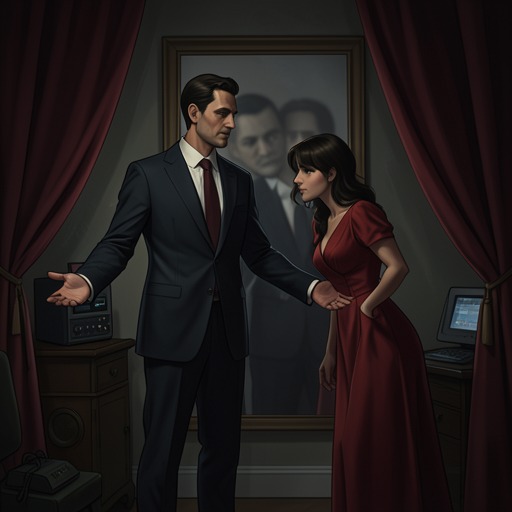
During the couple's travels, Duncan becomes absorbed in a pile of gold and gambles with the conviction that his success comes from reason rather than luck. Bella Baxter has already hidden four hundred friedrichs d'or from the pile while he slept; when he wakes and counts the remaining money into neat heaps, he does not notice what is missing. His confidence persists. He tells Bella that people had urged him to stop before his luck turned, but that he played on and won through reason. He invokes their marriage as grounds for her faith in him, treating the relationship as an assurance that she should trust his judgment.
Bella answers not with trust but with a prediction: if Duncan returns to the betting shop, he will lose everything. When he asks what she will wager, she offers five hundred of his money on terms that give her a way to manage what follows. If he comes back richer, she will return the sum and marry him; if he loses the rest, they will have funds to leave. Her proposal turns his appetite for gambling into a test with practical stakes, but it cannot make his play predictable.
Loss and the False Last Turn
While Duncan is away, Bella meets a new friend in a park and asks after him. The report she receives is stark: he began early and lost everything in an hour, then went repeatedly to the bank and telegraph office. The scale of the financial activity contrasts with how quickly his money disappears. Rather than treating this loss as a reason to stop, Duncan returns to the hotel penniless and theatrically despairing. Bella tells him the five hundred she has retained can keep their wedding journey going, and he appears to accept that they will travel onward.
At the station, however, Duncan leaves Bella and their luggage in the ladies' waiting-room on the pretext of going out for a cigar. He has gone back to the betting shop for one last attempt to recover his losses, and loses everything again. Bella finds him raving and decides that ordinary reassurance will not quiet him. She adopts a frozen manner and tells him she will get them money, then leaves him waiting while she acts. The sequence makes the return to gambling more than a single financial reversal: even a departure already in progress is interrupted by the possibility of one more wager.
Card Play and Repeated Ruin
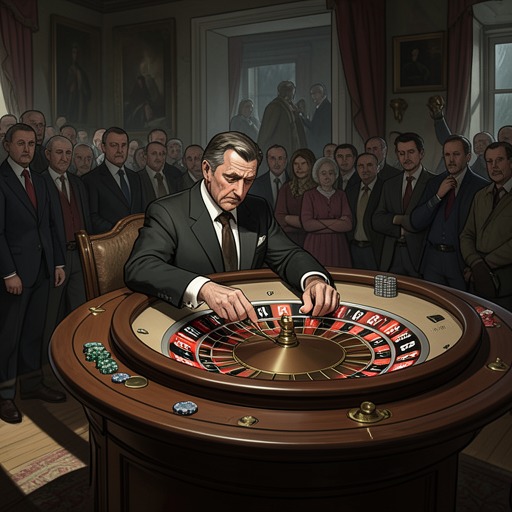
Later, aboard a passenger ship travelling from Gibraltar to Marseilles, Duncan turns to cards. He plays with men in the main saloon through the afternoons and evenings, continuing after Bella has gone to bed. After a winning night, he presents himself as newly restored and insists that games of skill, not games of chance, suit him. He counts his winnings and, for the first time in weeks, gets into bed the right way round. Bella begins to enjoy what he calls their second honeymoon, but he falls asleep while she remains awake, anticipating what will follow.
The gains do not hold. Instead of going directly to Paris, the couple stay in a hotel recommended by one of the card players, who introduces Duncan to a club or card school. He plays every afternoon and evening while Bella waits at the hotel, drinking chocolate and brooding over Malthus' On Population. It takes five days for him to lose all he has. This time he comes to their room and acknowledges that he is again at Bella's mercy, asking whether she can pay the hotel. His admission recognizes the practical consequence of his play, but it does not undo the pattern that has produced it.
Bella does not use her reserve money until the last possible moment. She packs essentials, gets herself and Duncan ready, and takes him to a railway station, where they board an overnight train to Paris. On the way, he tries to break away and return to the hotel for his father's dressing-case and silver-mounted brushes. Bella refuses, pointing out that the room he booked has already become the hotel's compensation. The discarded belongings give his losses a domestic and personal cost, while Bella's decision to leave prevents another return to the game.
Blame, Money, and the Relationship
In a later confrontation, Duncan explains his ruin through a story in which Bella's earlier concealment of five hundred friedrichs d'or broke his run of luck and stopped him from breaking the casino. He claims that the winnings would have gone to the poor and the church, and imagines the wealth they might have enjoyed: a London town house, a Mediterranean yacht, a Scottish grouse moor, and even a mansion in Heaven. These imagined outcomes turn gambling losses into a catalogue of benefits he believes were stolen from him. He also says that he no longer wants to marry Bella and describes their poverty as chaining him to a woman he hates.
Bella responds by opening the lining of her coat and revealing Clydesdale and North of Scotland banknotes worth five hundred pounds sterling. She has kept them for the moment when he would need money to leave, and offers the entire sum so he can return to Glasgow and be free of her. The contrast is sharp: Duncan has treated money as the means to a restored fortune and a grand shared future, while Bella has kept a separate reserve for escape. Her offer does not reconcile them or persuade him to accept the practical choice calmly. He attempts to swallow the notes and throw himself out of the window; unable to open it, he rushes through the door and tries to dive down the stairs headfirst.
Narrative Significance
The gambling episodes repeatedly shift Duncan from assurance to dependence. He presents his play as rational, distinguishes skill from chance after winning at cards, and imagines charitable and marital rewards that would follow a great success. Yet each new opportunity to recover money produces another loss, and Bella must respond by concealing funds, arranging travel, or making a reserve available for separation. The recurring movement from winnings or promises to ruin supplies the immediate pressure behind their changing journey together.
Because these episodes are recounted by Bella in her diary to Godwin Baxter, Duncan's gambling reaches the reader through the practical details she observes: counted heaps of gold, a deserted waiting-room, repeated trips to the bank and telegraph office, afternoons spent at a card school, and the notes hidden in a coat lining. Her account does not present his claims of reason as proof that he has mastered chance. Instead, their contrast with his repeated losses leaves the central contradiction in view: he insists that he is acting by judgment even as gambling makes Bella responsible for managing the consequences.